
General Education Courses
As a college exclusively dedicated to preparing healthcare professionals, Bellin College offers general education courses that are catered to students with an interest in healthcare. The General Education program espouses the following goals:
- To provide students with broad knowledge and intellectual concepts to complement their healthcare specialization.
- To provide students with intellectual stimulation that encourages lifelong learning.
Along with these goals, the General Education program supports the following program outcomes:
- Students will communicate effectively through writing and speaking.
- Students will identify and apply mathematical and scientific reasoning skills in problem-solving.
- Students will demonstrate critical thinking skills.
- Students will exhibit an understanding of the processes of the natural world and human interaction with it.
- Students will display an understanding of honest and ethical behavior and an appreciation for diverse perspectives.
All currently enrolled Bellin College undergraduate students take the General Education Core Classes, which consist of the following*:
BI 156: Anatomy & Physiology I
BI 256: Anatomy & Physiology II
CH 122: General Chemistry
CM 100: Health Communication
DI 202: Diversity Issues in Healthcare
EN 115: Composition and Professional Writing
MA 101: College Algebra
PH 202: Introduction to Medical Ethics
PS 105: Introduction to Psychology
*Suitable upper-level substitutions exist for some classes; Bellin College does accept substitutions from transfer institutions.
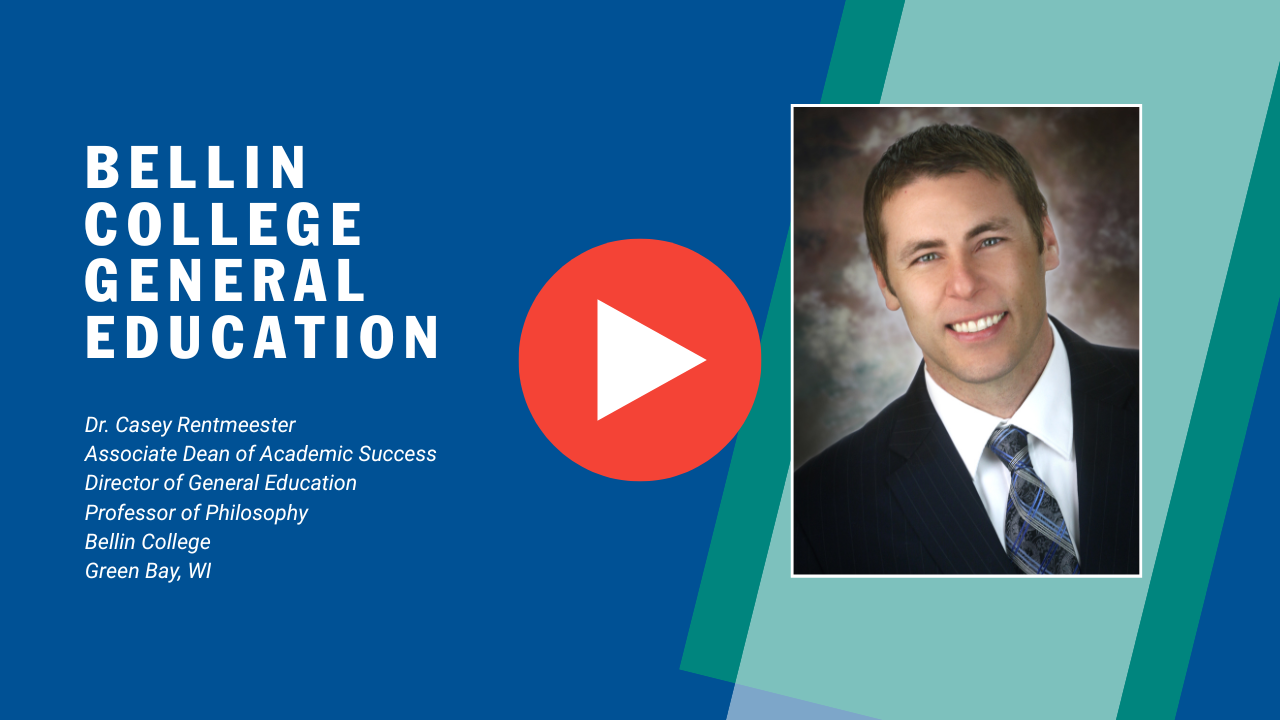
The broad knowledge students gain from the General Education program provides a foundation for students to succeed in their majors and ultimately in their professions. Critical thinking, communication, scientific and mathematical literacy, ethical decision-making, and an appreciation for diversity are among the highlighted aspects of the program.
Non-Degree Seeking Application
Spring 2026 Course Offerings
Spring semester: Face-to-face The second of a two-course sequence, this course provides a lecture and laboratory study of the structure and function of human cells, tissues, organs, and body systems as they relate to human health and biology. The course stresses homeostatic control systems and coordinated body functions with an emphasis on the cardiovascular, lymphatic, immune, respiratory, digestive, urinary and reproductive system. Prerequisite(s): BI 156 Anatomy & Physiology l or consent of instructor Spring semester: Online Healthcare spending has been rising immensely for decades, now accounting for a significant portion of the US economy and federal budget. Health economics is an increasing field and is a significant part of public policy in all countries throughout the world. The choice on how to pay and provide healthcare has direct effects on the wellbeing of consumers and producers of healthcare nationwide, while also playing a key role in national economic performance. In this course the students will cover a number of topics including basic economic concepts essential to healthcare, aspects of healthcare in the US, as well as healthcare reform. The students will apply economic principles to a range of important healthcare policy questions. Prerequisite(s): None Spring semester: Face-to-face This course provides the opportunity for the learner to develop the knowledge and the skills process in the understanding of general chemistry. Topics covered are: metric system, problem-solving, periodic relationships, chemical reactions, equilibrium, properties of water, acids, bases, salts and gas laws as well as an introduction to organic chemistry. Students focus on skill development, communication and problem-solving. Critical thinking skills are developed as students learn to collect and analyze data and work out the correct solutions. Prerequisite(s): MA 101: College Algebra Spring semester: Face-to-Face This course is an introduction to one of the fastest growing areas of the communication discipline: health communication. The course surveys current issues, theory, and research surrounding health communication, and focuses on a variety of issues, such as perceptions of health, provider–patient relationships, health organizations, health campaigns, intercultural issues, and the use of new communication technologies in healthcare. Students gain practical experience with communication in healthcare in a variety of simulated contexts. Prerequisite(s): None Spring semester: Online World Religions provides a survey of the major religions of the world. Students gain an introduction to the history, beliefs, practices, and sacred texts of primal religions, Judaism, Christianity, Islam, Hinduism, Buddhism, Daoism, and Confucianism, and others. Key historical and contemporary religious leaders are discussed in detail. Prerequisite(s): None Spring semester: Online This course brings to light the often-untold stories of refugees and immigrants seeking to make a home in America by focusing on the modern immigrant and refugee experience of various different groups, all relevant to either or both Northeast Wisconsin and America in general. Students explore how and why these populations of immigrants and refugees come to America and the immense challenges they face in a new country with a special eye towards implications in the context of healthcare. Prerequisite(s): None Spring semester: Online This course introduces students to the language of medical terminology and the importance of proper medical term usage. Focus is placed on accurate spelling and pronunciation of terms; building knowledge of basic medical vocabulary with an emphasis on prefixes, suffixes, roots; combining word forms; and developing a comprehension of medical terminology related to each system of the body. Prerequisite(s): None Spring semester: Online This course is designed to give students an accurate understanding of the psychological changes that individual’s experience as they grow across the adult life span: young adult, middle adulthood, and older adults. Students will examine the life span from an inter-professional perspective, stressing the interaction of physiological, psychological, cultural, and social aspects of human development while examining the dynamic forces that underlie and produce changes. The course will emphasize the need for identifying the ever-changing relationships between the individual and society that help to shape the experience of aging and emphasizing the topical areas in which psychological change occurs. Prerequisite(s): None Spring semester: Online This course introduces students to descriptive statistics, both graphical and numerical, elementary probability, general and sampling distributions, and the fundamentals of statistical inference, including hypothesis testing, correlation, and T-testing. Statistical concept in healthcare highlighted included the Prerequisite(s): None Spring semester: Online This course focuses on important issues currently facing the medical community and society at large. Topics may include cultural approaches to healthcare, disability and aging, the history of nursing homes and assisted living facilities, end of life decisions, the use of technology and electronic health records, social and political approaches to healthcare and the cost of healthcare, ethics surrounding pregnancy, vaccine ethics, medical errors, and overtreatment, among others. Prerequisite(s): None Spring semester: Online This course discusses the intricacies of social behavior and perception. How does social stigma and deviance factor into an individual’s mental health and wellbeing? Parallels will be drawn between social treatment and interactions with stereotyped individuals and their long-term mental health levels. As much as psychological stability is based on the nuances of brain activity and capacity, there is a strong correlation between the treatment of those with prosocial behavior versus seemingly antisocial behavior and their mental stability. Students will strive to make and understand those connections in this class. Prerequisite(s): None Spring semester: Face-to-face Developmental Psychology studies human growth and development across the entire lifespan. Students learn the characteristics of development from conception to death and the various influences on the development of human beings. Topics include the biological, physical, cognitive, and socioemotional aspects of human development. Prerequisite(s): None Spring semester: Face-to-face In this course, students practice foundational yoga poses to improve strength, flexibility, and balance in the body. Emphasis is placed on bringing awareness and mindfulness to the body through practicing a series of poses and breathing techniques to promote a mind body connection. Prerequisite(s): None
difference between correlation and causation, mortality and morbidity, and efficacy and effectiveness.
Bellin College also accepts general education credits from accredited two and four-year institutions; as well as offers specific transfer agreements with certain colleges.
General Education classes at Bellin College are transferable to most colleges and universities. Students interested in taking classes as a non-degree seeking student can apply below:
Non-Degree Seeking Application
Early College Credit Program (ECCP)
High school students at public and private high schools in Wisconsin can earn college credit through the state-approved Early College Credit Program (ECCP). Select Bellin College general education courses are eligible for ECCP. ECCP allows students to take college classes if approved by the high school and if the student has met all specified requirements. Many Bellin College general education courses are eligible for enrollment through ECCP. However, notable exceptions include the natural science courses (Chemistry, Anatomy & Physiology, and Microbiology) and the Nursing Assistant program, NA 150.
High school students interested in enrolling in Bellin College general education courses via ECCP should contact their high school counselor for more information. Additional information is available at this link: https://www.waicu.org/dual-enrollment/eccp